Norway’s deep, icy fjords have long been a must-visit travel destination for avid explorers. Set within astonishing natural landscapes, these waters, carved by ancient glaciers and often bordered by thundering waterfalls, soaring cliffs and snowy mountains, are truly a sight to behold.
While some of the most iconic fjords, including Geirangerfjord and Nærøyfjord, are well-recognised and hold UNESCO World Heritage status, there are several other destinations we might recommend.
To help guests planning a holiday in Norway, we’ve shared insights into some of our favourite spots for cruises, hiking, kayaking, and romantic, secluded escapes, so you know what to expect.
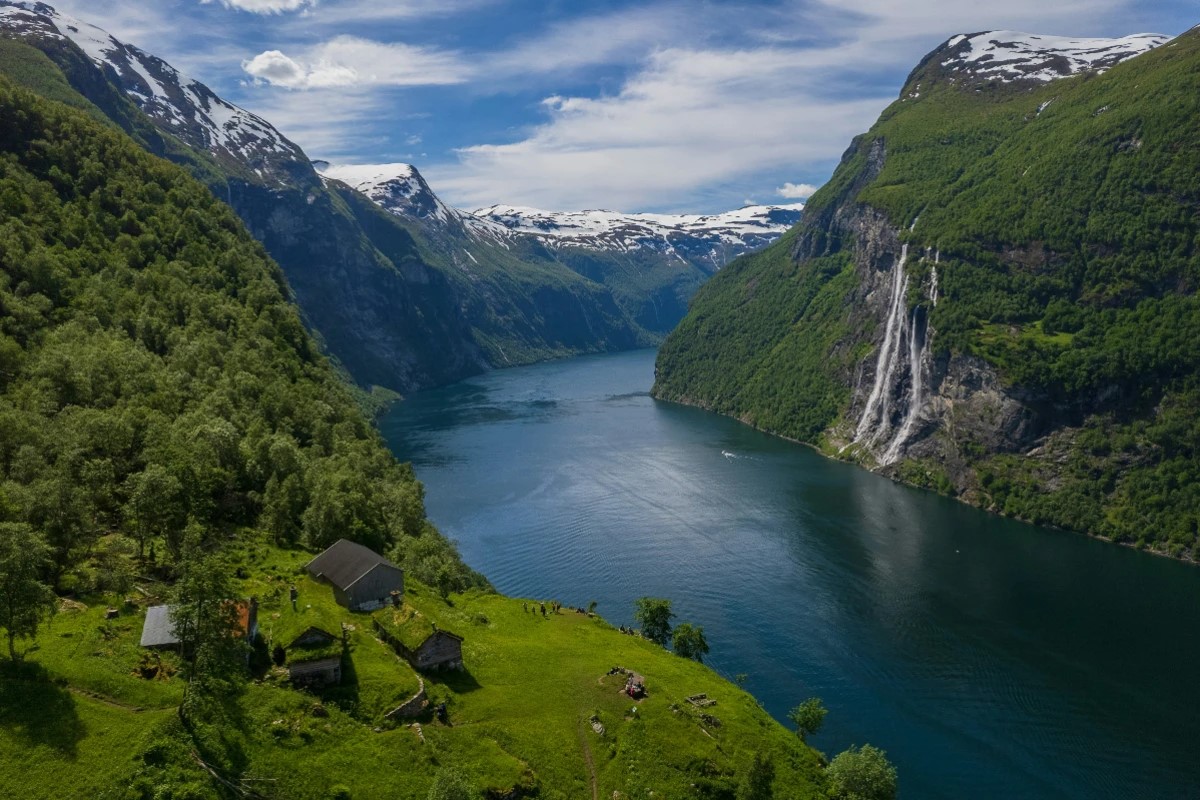
1. Geirangerfjord: Norway’s Famous Fjord
Geirangerfjord is one of Norway’s UNESCO-recognised fjords, and for good reason. It’s a staggering place to visit, with dramatic cliffs that rise almost vertically from the water, crashing waterfalls and deep blue waters with the snowy mountain peaks in the background.
Three waterfalls at Geirangerfjord are the most famous, each with a unique name: The Seven Sisters, The Suitor, and The Bridal Veil.
Located close to the Art Nouveau city of Ålesund in the north, Geirangerfjord village hosts fjord cruise operators and sightseeing boats. Alternatively, you can hike around the fjord or join a scenic guided driving tour, ideal if you’d like the chance to capture some spectacular photographs.
Often described as the classic picture-perfect Norwegian experience, Geirangerfjord is great for summer tours, snowy scenery in winter, and a quieter atmosphere in spring and autumn, with plenty of hotels and spas in the surrounding area.
2. Sognefjord: Known as King of the Fjords
The King of the Fjords earned its title as Norway’s longest and deepest fjord, which is over 1,300 metres at its deepest and stretches over 120 miles. This also means there are diverse landscapes and experiences to explore, with small, charming villages dotted around the fjord and its numerous branches.
Visitors might stay in Solvorn, Lærdal, or Balestrand, among other options, and visit local glaciers, Viking heritage sites, and traditional farms, or spend their time hiking, kayaking, and biking, or join a day cruise on the water.
There is a huge amount to see and do during a visit to Sognefjord, making it a great option for families, active visitors, and those touring Norway. Many start in Bergen as the gateway to the fjords, with Sognefjord just north of the city.
Guests can also add the Flåm Railway to their trip, travelling from Bergen through Myrdal before riding the steep, historic line that drops into Flåm, right next to one of the Sognefjord arms.
3. Nærøyfjord: A UNESCO-Listed Natural Wonder
Nærøyfjord is a branch of Sognefjord, and anyone travelling to the fjords is well advised to see both. The fjord stretches between Aurlandsfjord and Gudvangen and is just 500 metres wide in some spots, making it one of Europe’s narrowest.
Another UNESCO site, you’ll be able to discover:
- Tiny settlements and welcoming villages
- Boat cruises alongside cascading waterfalls
- Trips from Gudvangen to Flåm
- Hiking and kayaking trails and guided tours
While all Norwegian fjords are beautiful, Nærøyfjord is often one of the most recommended destinations for romantic breaks, outdoor getaways, and keen photographers because of its narrowness and the sheer scale of the surrounding scenery.
4. Hardangerfjord: Blossoms, Waterfalls and Mountains
Our next recommendation is Norway’s second-longest fjord, which travels inland from the Atlantic right to the country’s centre. Nationally, the Hardangerfjord is best known for its spring blossoms, as the centre of the Norwegian fruit and cider industry.
The orchards come to life throughout the spring, but there is much more to see. You’ll be able to walk the Hardanger Bridge, a suspension bridge that traverses the Eidfjorden branch, visit Vøringsfossen, one of Norway’s most famous waterfalls, which falls from the Hardangervidda plateau 180 metres into the Måbødalen valley, or venture through Folgefonna National Park, which protects the third-largest ice cap in Norway.
Adventurers often plan to hike the Trolltunga trails, kayak along the water, or cycle to see the natural beauty of Hardangerfjord up close.
5. Lysefjord: A Fjord for Adventure Holidays
Finally, Lysefjord is the southernmost fjord in western Norway, close to the city of Stavanger, with established hiking routes to dozens of amazing viewing spots, including Kjerag and Preikestolen (Pulpit Rock), which towers 604 metres above the Lysefjord.
While there are limited roads along the fjord, visitors often join the car ferry to head to Lysebotn, which stops in the tiny village of Flørli where guests can stay overnight, eat at local restaurants, or climb the extensive wooden staircase with over 4,000 steps.
Fjord cruises are always popular, and guests can combine them with hiking and kayaking, plus a city break in Stavanger, to see as much of Norway as possible and contrast traditional villages and outdoor escapes with the city’s coastal heritage.
Deciding When to Book a Norwegian Fjords Holiday
There are no bad times to travel to the fjords of Norway, but there are contrasts in terms of access to mountain routes, how busy lodges and hotels may be, and of course in the weather.
In summer, longer days give guests more time for outdoor excursions and activities, with hiking, kayaking, swimming, boat trips, and tours around the mountain trails often key highlights for those who love sports or adventure.
The weather is warmer, though rarely hot, which keeps conditions comfortable, and melting snow higher up in the mountains makes the waterfalls particularly impressive.
Winter holidays in Norway are great for those hoping to head north to glimpse the Northern Lights. While the Aurora can’t be guaranteed, it is often easiest to see in the rural and most northerly regions away from the light pollution of the major cities, and many travellers try to combine the fjords with this most enchanting of natural phenomena.
If you’d like mild weather, changing colours and a quieter getaway with fewer visitors, the spring blossoms around Hardangerfjord will be ideal. The warm hues of the autumn are also excellent for guests who’d like a tranquil holiday, or want to visit the fjords and then head onward to Tromso or the Lofoten Islands.
We hope this information has helped shape your plans for your visit to the fjords, and, as always, if you have any questions or would like help organising your trip, you are welcome to get in touch.
This entry was posted on Wednesday, September 16th, 2026 at 10:07 am; on the subject of Norway.