Day 1: Arrival in Tromsø
Arrive in Tromso and transfer to the hotel. Afteronoon to explore Tromso. We suggest a visit to the famous Polaria. Housed in a very distinctive building, you will find an Arctic aquarium, interesting knowledge-based exhibits and a panoramic cinema. Overnight at the Clarion Collection Hotel With or similar.
Day 2: Tromsø to Honningsvåg cruise
Breakfast at the hotel. Half day of leisure before boarding the Hurtigruten Cruise ship in the afternoon (at 18.30). On board one of the Hurtigruten Cruise ships you have a unique opportunity to explore the wonderful arctic landscape. You will see glaciers, the colorful culture of the Inuit and wild animals, making this one of the most interesting voyages in the world. Overnight onboard Hurtigruten in an outside cabin.
Day 3: North Cape and Honningsvåg
Breakfast on board. The day starts with an excursion to the northernmost point of Norway, the North Cape. The tour goes by coach from Honningsvåg through the sub-arctic landscape towards our destination. The plateau itself rises 307 meters up from the Arctic Ocean which gives you a majestic view. Entrance to the North Cape Hall with viewing platform, souvenir shops, cinema, cafeteria and restaurant is included in the excursion. Transfer back to Honningsvåg for your overnight stay at Rica Hotel Honningsvåg.
Day 4: Honnigsvåg - Alta
Breakfast at the hotel. The morning is free before your journey continues by local bus in the afternoon to Alta. You will drive through the underground tunnel to the mainland, along the Ponsanger fjord and along the pristine Sennalandet plains of Finnmark county. Overnight at Rica Hotel Alta.
Day 5: Alta - Sorrisniva (Snowmobile Safari and Igloo Hotel)
After having breakfast at the hotel, start the day with a breathtaking snowmobile safari through the beautiful landscape of Finnmark. You will follow the old trade route towards Karasjok, which offer a great variety of nature, from forest and valley to unending, snow-coverd plains. You will also get a pre-view of the Igloo Hotel, your accommodation for the night. Return to Alta.
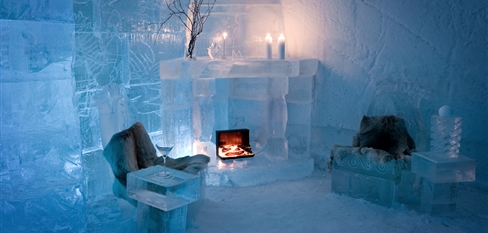
In the afternoon a bus will pick you up at the hotel for transfer to the Sorrisniva Igloo Hotel. The hotel measures approx 2,000 square metres and the entire hotel, with its 30 rooms, is completely made of snow and ice. Before going to bed you will be served a 2-course dinner in the beautiful wooden restaurant shaped like a Sami Lavvo. The temperatures inside the igloo remain constant between minus 4 and minus 7. Thanks to natural reindeer-hides, "mattresses" and sleeping-bags that keep you warm, you will have a comfortable night. We recommend wearing woollen underwear and a hat during the night. Overnight at the Sorrisniva Igloo Hotel.
Day 6: Departure from Alta
Breakfast and morning sauna at the hotel before the coach takes you back to Alta. Transfer to the airport for your departure flight.
The Sorrisniva Igloo Hotel: The Igloo Hotel is situated in Sorrisniva (former Alta Friluftspark), 20 kilometres from Alta town centre. in idyllic surroundings on the banks of the Alta River. The Igloo Hotel is the only one of its kind and is built for the 14th time in 2013!
Visas
For your holidays to Norway, Iceland, Sweden, Denmark, Finland, Estonia, Latvia, Lithuania, Poland or Ukraine, you will not need a visa if you have a valid passport from any EU country, Australia, Canada, USA, Japan (there are more, so check with us to make sure). Please note that your passport should be valid for at least six month after the date of your return.
However, if you plan to travel to Russia, you will need a visa, which we can help organise for you.
Will I see the Northern Lights?
Norway:
Northern Norway is one of the world's best places to experience the Northern Lights (Aurora Borealis). In Northern Norway, Northern Lights occur in up to 90% of every clear night in the period from late September to late March. Most Northern Lights occur in the time span from 6pm to slightly after midnight, with an absolute peak at around 10-11pm.
In Norway, the area north of the Arctic Circle is prime aurora territory. The various destinations in the High North have a distinct personality, and are well worth exploring. Major places in Northern Norway are Tromsø, Kirkenes, Alta, Bodø, Lofoten and Vesterålen Islands and Svalbard.
Iceland:
The Northern Lights are in the Northern sky from September through April but are only visible when the sky is clear and free of clouds. Like many of natures wonders, it’s ephemeral – they may be visible, they may appear for a bit and then be gone. But it’s worth it to be patient. Because they’re a winter event, you need to be prepared to wait outside, while looking for them. It’s best to dress very warmly, in layers, with good footwear, gloves, hats and whatever else will make you comfortable while you await this truly amazing event. The Northern Lights can be pretty spectacular, and for the best photos we recommend using a tripod. Much of Iceland offers a very a good chance to see the Northern Lights when conditions are right. Remember – the Northern Lights are natural phenomena, not guaranteed, but appreciated all the more for their elusive qualities.
Finland:
The best place to see the Northern Lights in Finland is in the Northern Lapland region, which is almost entirely located within the realm of the Arctic Circle. During the dark winter months here, when the sun rarely peaks its head over the horizon, you can expect to see the Finland Northern Lights with regularity, and other peak seasons include February through March and September through October. The most common colours of the Northern Lights are greenish-yellow and red.
The Finnish term for the Northern Lights, Revontulet, meaning fox fire, comes from an old tale where the fox was believed to swish its bushy tail on the snowy fell landscapes, throwing sparks into the air.
As mentioned, Lapland is the best place to see the Finland Aurora Borealis, with the Kilpisjarvi area offering the most abundant opportunities. The best time of the day to see the Finland Northern Lights is between 9 pm and 11:30 pm, though they are certainly not restricted to this time frame.
Sweden:
In Northern Sweden, the Northern Lights usually occur during the winter months through late March or early April, but they can be spotted as early as September in the Northernmost parts. Your best chance of catching a glimpse of the Northern Lights is on cold winter nights when the sky is clear and cloudless. You need to be away from city lights, which dilute the effects of these natural phenomena, so head out into the countryside. On clear nights, the Northern Lights can be visible from most locations in Swedish Lapland, occurring between 6 pm to and 2 am, with the strongest shows happening between 10 pm and 11 pm. For those willing to brave the cold on winter nights, here are some of the best locations in Swedish Lapland for viewing these phenomena:
Abisko National Park
Abisko National Park, a couple of kilometers north of Kiruna, is a prime location for viewing the Northen Lights. The scientifically proven “blue hole” — a patch of sky over the Torneträsk lake that usually remains clear despite overcast weather in surrounding areas — gives Abisko its own micro-climate, which is suitable for catching the lights.
Jukkasjärvi and the Torne Valley
Not only does the village of Jukkasjärvi (population roughly 541) boast the world’s first ice hotel (rebuilt ever year from Torne River ice), it’s also one of the best regions to view the Northern Lights. ICEHOTEL organizes guided tours for guests which takes the to the Esrange Space Center located 30 minutes from Kiruna. You can dine at a wilderness camp and get the chance to scan the Arctic winter sky for aurora borealis.
Other regions in Swedish Lapland
As mentioned earlier, if weather conditions are just right (clear, dark, cold, and cloudless), you might catch a glimpse of the Northern Lights from any location within subarctic and arctic Sweden — even close to larger towns such as Luleå, Jokkmokk, Arvidsjaur, and Gällivare.
Greenland:
The northern lights - or Aurora Borealis as it is officially known - actually occur all year round, but cannot be seen during the summer months in Greenland due to the midnight sun. The phenomenon is often seen around midnight and is best experienced on a dark, clear night in the period from September to the beginning of April. If you are travelling during this period, you can see the Northern Lights from anywhere in the country, whilst in South Greenland the northern lights can be seen from as early as the end of August.
Insurance
Travel insurance is required and also advisable. If you do not have a valid policy, please check our Insurance link on the bottom of our homepage. Our recommended partner is Essential Travel, who are authorised and regulated by the Financial Services Authority. If you have any questions, please don't hesitate to contact us.
Language
You will be able to communicate quite well with the locals, as most people in the service industry are quite adept at speaking English. If English doesn't work, then try Russian (if you can), or German. The further you go from the major cities, the less English you will hear. However, do not let the language barrier keep you from exploring the beauty of the country side. We can always arrange English speaking guides to accompany you wherever you wish to go.
The Estonian language is similar to Finnish and is unrelated to Latvian, Lithuanian or Russian. Latvian and Lithuanian are two of the oldest languages, with roots traceable to Sanskrit. This makes them quite challenging to learn, but attempting a few words will put a smile on the local faces. Russians use the Cyrillic alphabet, so reading street signs and tube maps will be a challenge in St Petersburg .
Currency
You can get local currency from ATMs at the airport where you land or in the major cities. Be aware that your bank will charge you a service fee and exchange rate fee for the transaction, but this is likely to be less than exchanging money in the UK before you depart. Please note that in Russia exchange bureau's and banks will not except Scottish bank notes.
We suggest choosing the right credit card for spending abroad. Most credit cards will have an additional cost (about 3%) to the bank exchange rates. You can avoid it by obtaining a specialist overseas card that does not add this % and will give you good exchange rates that are better than money exchange bureau rates.
Credit cards charge you interest rates, but some debit cards (bank account cards) could have fees that could add up to £ 1.50 every time you spend.
We recommend checking with your bank what fees/interest rates will be applied to your card when using it abroad in order to make an educated decision on what card to use.
Most restaurants and shops will take credit/debit cards like Visa and Mastercard, however, many places will not accept AMEX.
Traveller's cheques are difficult to cash, so we recommend not to use them.
Airport or ferry terminals in most cases will have the worst money exchange rates, so if you must get it from the airport, pre-order money for pick-up to get a better rate.
The local currencies are (alphabetic order):
Denmark - Danish Krone
Estonia - Euro
Finland - Euro
Greenland - Danish Krone
Iceland - Icelandic Kroner
Latvia - Latvian Lat
Lithuania - Lithuanian Litas
Norway - Norwegian Kroner
Poland - Polish Zloty
Russia - Russian Ruble
Sweden - Swedish Kroner
Ukraine - Hryvnia
Restaurants
Dining opportunities are plenty, from ethnic to exotic. We would suggest you to try some national dishes and get a real taste of the region. Note that most traditional dishes contain meat and are fairly heavy, but very tasty.
Reservations in advance are recommended for up-market restaurants, especially for Friday and Saturday evenings.
Tipping - many of the up-market establishments will let you know how good their service is by including it on the bill. Rounding up the bill is usually sufficient, unless you feel your server deserves an extra bit of recognition.
Transportation
Railway mostly serves domestic routes and is used as an easy and quick way to get from the capital to major cities of the country. There are some international routes, like to Moscow and St. Petersburg, but time spent on the way will be quite long.
Buses are one of the most convenient ways to travel between the Baltic States. Eurolines will get you between Riga, Vilnius and Tallinn. One way tickets will cost £ 15 - £ 20 and approximate travel time is 5 hours between the cities. Ticket reservations in advance are recommended.
Taxis are the quickest and most convenient way of travelling round the city. You'll find them located close to the main hotels. Usually it's quite easy to catch a taxi on the street, however, it's much better and safer to order one by phone. Taxi costs in all of the Baltic countries and Poland are approximately the same and a ride in the centre of the city will cost you approx £ 5 - £ 7. Taxis in Finland and Russia are considerably more expensive. It is always a good idea to get your hotel to book a taxi for you and ask approximately how much the trip will cost before you get in.
We would not recommend you to take public transportation within the city, as it's usually crowded and it may cause you unnecessary anxiety about where to stop.
Mobile Phones
There are several mobile operators in each Baltic country, the Nordics ( Norway, Sweden, Denmark and Finland incl. Iceland and Greenland as well as Poland, Ukraine and Russia. If you have an international connection, there shouldn't be any problems with your incoming and outgoing calls.
In case your phone doesn't work, please check in the local mobilephone shops and you can buy Calling cards etc. or ask in your hotel, they should be able to advise you too.
Internet Access
Internet access is available at Internet Cafés, which mostly are located in the central part of the city. Most hotels have internet access.
Postal Services
Stamps are available in the post offices and in most newspaper kiosks. Approximate price for a stamp to European Union countries will vary but between appx. £ 0.30 to £ 0.70. You'll see post boxes on the streets or you can ask hotel representative to send your post card, they'll gladly help you.
Emergency Numbers
Emergency telephone number for the police, ambulance services or fire department in Norway, Iceland, Denmark, Sweden, Finland, Estonia, Latvia, Lithuania, Russia, Ukraine and Poland - 112.
Greenland uses 911 and for mobile phones only 112.